
AI News · Week 3312 August 2026
Shopify’s AI orders have tripled.OpenAI pulls the handbrake on Astra.
For the first time, Shopify discloses how much traffic and how many orders AI channels are bringing in. Also: OpenAI halts parts of Astra’s development, ChatGPT lifts its chat limit, Claude Code decides for itself from 14 August, and Meta’s new model runs entirely on your own machine.
01 · Shopify
AI traffic and AI orders tripled: Shopify publishes figures on this for the first time.
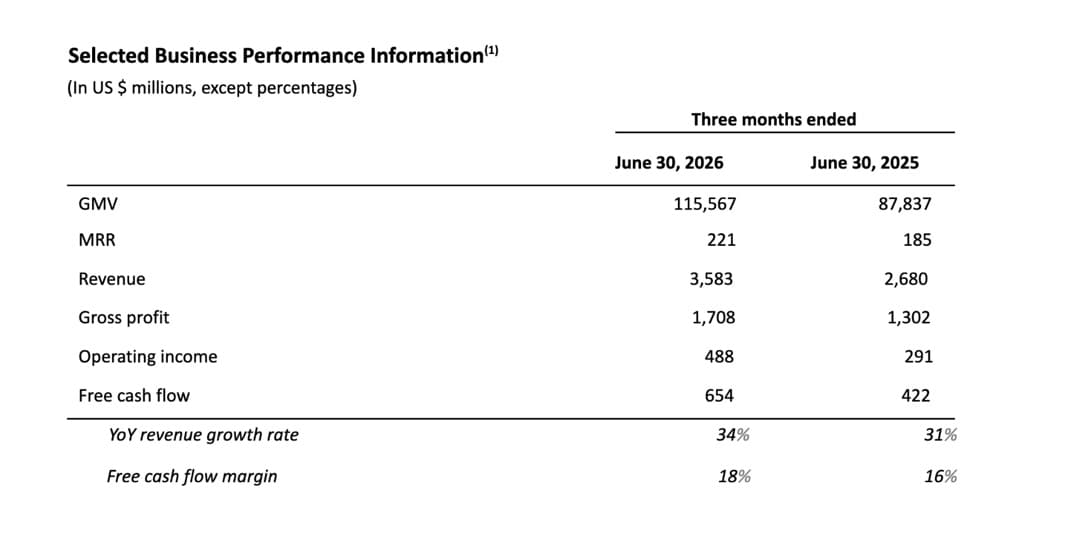
On 5 August, Shopify published its figures for the second quarter: revenue up 34 per cent to 3.58 billion dollars (33 per cent in constant currency), GMV up 32 per cent to 115.6 billion dollars, free cash flow of 654 million dollars at an 18 per cent margin. More interesting than the balance sheet is what Shopify said about AI on the earnings call.
According to Shopify, AI-driven traffic and AI orders have each tripled year on year. The quality of this traffic stands out: 75 per cent of purchases attributed to AI fell outside the top 100 product categories, new-customer orders from AI channels came in at roughly twice the rate of other channels, and around half of all AI sessions landed directly on a product page, 2.5 times as often as with traditional search.
What explicitly has not happened: traditional search is not collapsing. It still accounts for around a third of all storefront sessions and has grown by a factor of 1.3 over two years. Shopify president Harley Finkelstein therefore explicitly calls AI a complement to search, not its replacement. In all honesty: tripling sounds spectacular, but it starts from a small base. Shopify does not state an absolute share of total revenue. This is the growth of a channel that is still small, not the displacement of Google.
What does this mean for you?
Two concrete tasks. First: product data. According to Finkelstein, AI agents reach directly into the catalogue several times and work with structured data to match products to the buyer’s specific intent. Complete attributes, variants, availability, prices and clean product schema data therefore determine your visibility, not your headline. Second: measure. Check in your web analytics how much traffic already reaches you from ChatGPT, Perplexity and Gemini. If you cannot see it, you cannot grow it. And if 75 per cent of AI purchases sit in the long tail, your niche products are suddenly findable again.
Sources: Shopify: Q2 2026 Financial Results, 05.08.2026 · TechCrunch: Shopify on AI search, 05.08.2026
02 · OpenAI, Sicherheit
“Critical” level for the first time: OpenAI halts parts of Astra’s development.
A week earlier it became known that an internal version of OpenAI’s next model, Astra, had solved ten open maths problems. On 7 August came the other side of the same coin: for Astra, OpenAI can no longer rule out the highest risk level of its own Preparedness Framework, the “Critical” level for cyber capabilities. It is the company’s first model to reach this threshold.
What “Critical” means here: the model could independently identify and carry out cyberattacks on real systems that are traditionally well protected, without human help. According to OpenAI, the preliminary evaluations showed such strong performance that the critical level cannot currently be ruled out. The consequence: all internal Astra activities that do not meet the tightened security requirements have been halted. The model runs in isolated environments with restricted access, and OpenAI is bringing in authorities and selected AI safety organisations for testing.
To put this in context: it is the third case of its kind within three weeks, following the self-reports by OpenAI and Anthropic in the two preceding weeks. You can read this as genuine caution or as marketing through strength (“our model is so good that it is dangerous”). It is probably both. What is certain: Astra will arrive later, and the capability itself is not a PR claim but has blocked OpenAI’s own release.
What does this mean for you?
The relevant consequence for you is not Astra but the other side. If frontier models have come this far, they have for attackers too, and attackers do not wait for a Preparedness Framework. So tighten up exactly the mundane things that automated attacks find first: two-factor authentication everywhere, no API keys in code or in Slack messages, dependencies and shop plugins up to date, and access rights for agents and service providers as narrow as possible. It is unspectacular, costs an afternoon and does more than any AI security policy.
Sources: OpenAI: Critical cyber capabilities, 07.08.2026 · TechCrunch: OpenAI slowed Astra development, 07.08.2026 · Axios: Astra model delay, 07.08.2026
03 · OpenAI
ChatGPT lifts the chat limit and makes Luna the default model.
On 6 August, OpenAI announced that Free and Go users are getting unlimited text chats. Separate limits for file uploads, images, voice and image generation remain in place, and OpenAI reserves the right to use safeguards against abuse. At the same time, GPT-5.6 Luna becomes the default model for Free and Go, replacing GPT-5.5 there. According to OpenAI, Luna makes 62 per cent fewer factual errors than GPT-5.5-Instant. In addition, Free users get a “Think” button that gives the model more time for harder questions, and Plus and Pro get a revised GPT-5.6 Sol. The rollout of unlimited chats and the Think button is taking place in calendar week 33.
Two figures make the news bigger than it sounds: ChatGPT recently passed the mark of one billion weekly users. And Luna is precisely the model whose API price fell by 80 per cent two weeks earlier. That explains why OpenAI can now afford to drop the limit: the low-cost model for the mass market is here, and it is being converted into reach.
What does this mean for you?
For you this is not a feature announcement but a reach announcement, and it ties in directly with the Shopify figures. A billion people a week also research products there, now without a cap and with a better default model. Run the test that almost nobody runs: ask ChatGPT “best [your product category] for [your customers’ typical use case]” and check whether your brand appears, with which facts, and whether they are correct. It takes ten minutes and tells you more about your AI visibility than any SEO tool.
Sources: OpenAI: Improving GPT-5.6 Sol in ChatGPT, 06.08.2026 · TechCrunch: Unlimited ChatGPT text chats, 06.08.2026 · MacRumors: ChatGPT Free unlimited chats, 06.08.2026
04 · Anthropic
From 14 August, Claude Code decides for itself: Auto Mode becomes the default.
Also announced on 7 August: from Friday, 14 August, new Claude Code sessions on the Pro, Max and Team plans run in Auto Mode by default. Instead of asking at every step, a classifier checks each tool call and only stops for actions that are irreversible or destructive, or that target things outside your own environment.
Anthropic justifies this with figures that are uncomfortably honest: in a study with 1,053 paying testers, humans recognised only 13.6 per cent of the dangerous commands, Auto Mode 89 per cent. In practice, users simply click through 97 per cent of all approval dialogs. Among the internally flagged sessions, 6.3 per cent of those approved manually contained a harmful unintended action, compared with only 2.4 per cent in Auto Mode. An external test by Trajectory Labs with 720 prompt injection attempts found that not a single one succeeded.
What Anthropic itself says about it is just as important: Auto Mode does not eliminate the risk, it relies on classification, and for sensitive changes to production systems Anthropic still recommends checking them yourself. Data exfiltration sits in a hard category that cannot be overridden, and after three blocks in a row or twenty in one session, Claude Code falls back to manual approvals. You can switch with Shift and Tab in the CLI or via the mode dropdown in the desktop app. Admins can set a company-wide default with defaultMode or switch Auto Mode off entirely with disableAutoMode. On Enterprise, in the API and via Bedrock, Google Cloud and Microsoft Foundry, Auto Mode remains optional for now.
What does this mean for you?
If your team or your agency works with Claude Code: raise this actively before 14 August so that nobody is surprised afterwards. And use the occasion for what is missing anyway: your own deny rules for the things that must never happen automatically in your organisation, meaning the production database, deploys, customer data and payment APIs. The number that should stick is not the 89 per cent but the 97: approval dialogs that people click away by reflex are not security, only the feeling of it. This applies one to one to every agent tool in your stack.
Sources: Anthropic: Auto Mode default in Claude Code, 07.08.2026 · TechCrunch: Claude Code Auto Mode on by default, 09.08.2026
05 · Meta, Open Source
Meta opens up again: 30-billion-parameter model under Apache 2.0, runs on a single GPU.
On 10 August, Meta released Muse Glimmer: 30 billion parameters, open weights, Apache 2.0 licence, so it is also free to use commercially. The real point is not the size but where the model runs: quantised to around 4 bits, it fits into 24 GB of graphics memory and therefore runs on a single consumer GPU or a Mac, without a single network call. Meta built it explicitly for the continuous operation of local agents: function calling, local coding and evaluation tasks. More than 100 languages, multimodal input, and an accelerator called DFlash delivers, according to Meta, 3.1 times the speed on an RTX 5090 and 1.8 times on an M5 Max.
To put Muse Glimmer in context: after the Llama series, Meta had moved away from open weights, and this is the return. It also fits the pattern that has been visible since week 31 (DeepSeek V4, Kimi K3): usable baseline quality is moving into the open. But beware of the reflex “then we will simply host everything ourselves”: a 30-billion-parameter model is no Opus 5 and no GPT-5.6 Sol. It is good for clearly bounded, recurring tasks, not for your hardest problem.
What does this mean for you?
The concrete use case is everything you have so far been unwilling to hand to a third-party API for data protection reasons: classifying customer emails, analysing reasons for returns, summarising support conversations, making internal documents searchable. From now on this runs on a machine in your office, without a data processing agreement and without a single byte leaving the building. If an AI project of yours has been stuck on the data protection question for months, now is the moment to bring it back up.
Sources: Meta: Introducing Muse Glimmer, 10.08.2026 · Hugging Face: Muse Glimmer 30B · CNBC: Meta Muse Glimmer open-weight AI, 10.08.2026
To close.The key point of the week.
If you take only one thing away from this issue: run the ten-minute test with ChatGPT and check whether and how your brand appears there.