
AI News · Week 3418 August 2026
ChatGPT gets advertising.Google turns reports into tools.
This week is less about a single super model and more about distribution: OpenAI is testing ads directly in ChatGPT, Google is pulling agents into Ads, Analytics and Sheets, Anthropic is preparing watermarks for the EU AI Act, and Gemini 3.7 Flash becomes the workhorse model. For brands this means: if you do not structure your data, product information and processes cleanly, you will be less visible in the next interface and slower to act.
01 · OpenAI
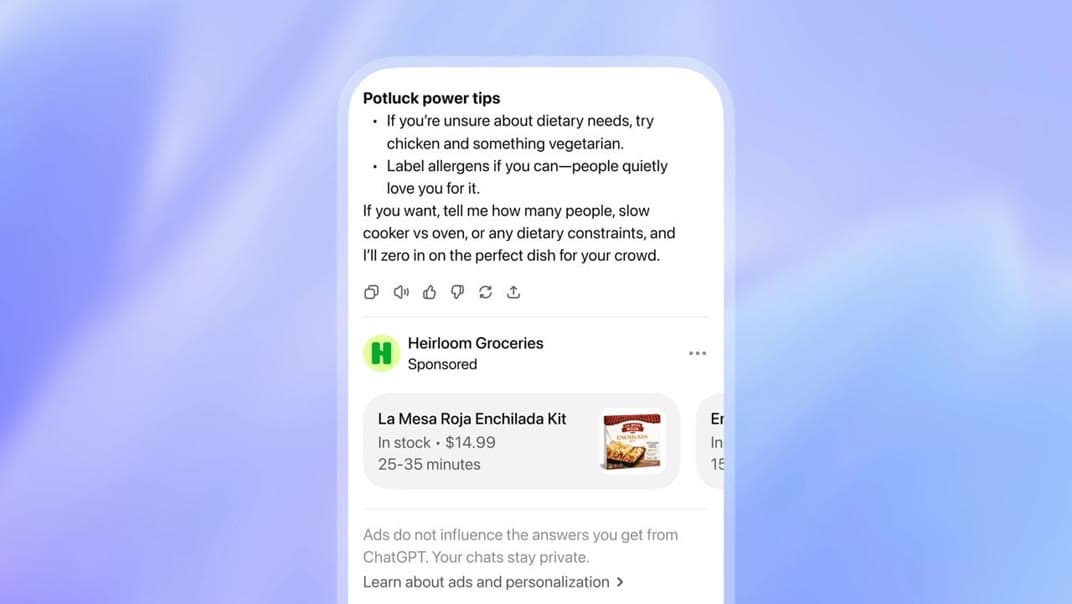
ChatGPT tests advertising: the most important new ad slot is emerging in the answer window.
According to its own announcement of 11 August, OpenAI is starting to test advertising in ChatGPT. The ads are to be clearly labelled, will not influence answers according to OpenAI, and will launch with user controls and privacy protection. Even so, this is the moment when ChatGPT becomes not just a tool but a potential performance channel.
For eCommerce this is bigger than just another ad format. When product search, advice and the purchase decision all end up in the chat, classic SEO is no longer enough. What matters is whether product data, reviews, category logic and content are clean enough for an agent to use them at all.
What does this mean for you?
Check now which product data a chat agent would find about your brand. Missing attributes, weak product detail pages and unclear unique selling points do not look better in the chat, they become more invisible.
02 · Google
Google builds the performance marketer into Ads and Analytics.
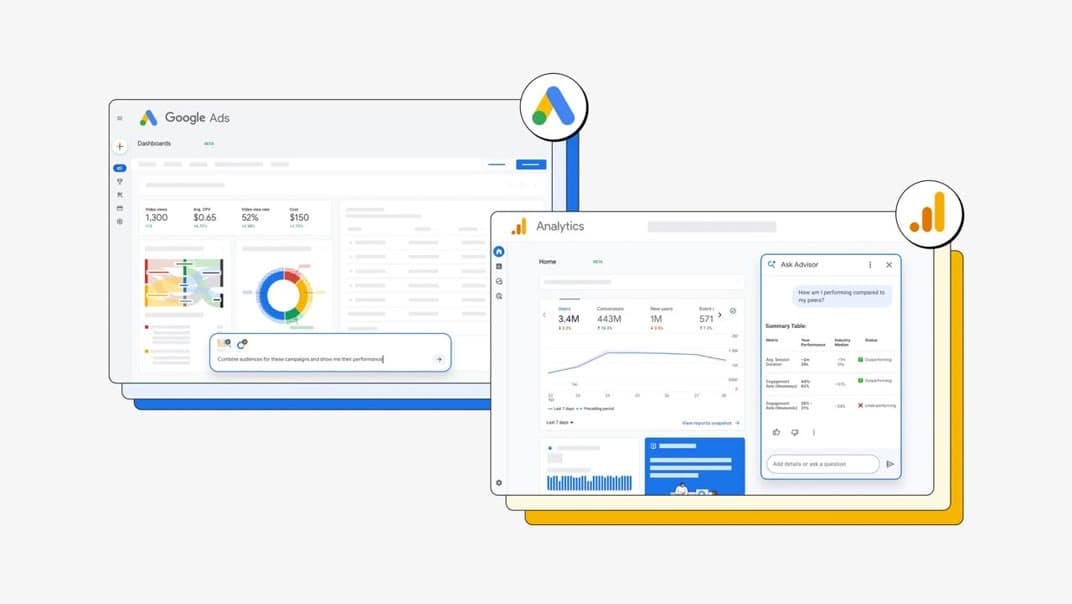
Google is rolling out new AI and agent features in Google Ads and Google Analytics. These include AI Overviews on the Analytics home page, personalised Insights Cards in Google Ads, prompts for your own analyses, visual dashboards created by text input and benchmarks against anonymised peer groups.
The point is not that Google is suddenly promising better campaigns. The point is that analysis work is moving closer to the interface. Anyone who has so far only exported raw data and built reports now faces competition from the platform itself.
What does this mean for you?
Set up a fixed library of questions for performance meetings, for example on impression share losses, basket value by channel or campaigns with weak margins. That way you test Google AI against real business questions, not against pretty demo reports.
Source: Google Ads Blog: Evolve your marketing with new AI tools, 10.08.2026
03 · Anthropic
Claude gets text watermarks because of the EU AI Act.

Anthropic explains how future Claude models will generate text watermarks. The marking is meant to remain invisible to readers, cost no extra tokens, identify no users or organisations and become verifiable via a Detection API. The background is the labelling requirement for AI-generated content in the EU.
The limits of the technique matter. Light editing probably does not remove the watermark completely, a full rewrite does. With code, pure proofreading or outputs that are factually determined, there is less room for a marking.
What does this mean for you?
In your workflows, draw a clear line between AI-generated, AI-edited and human-approved. For product copy, legal texts and support macros, what counts in the end is not only whether a tool applies a marking but whether your process remains traceable.
Source: Anthropic: How Claude’s text watermarking works, 14.08.2026
04 · Google Sheets
Sheets canvas turns spreadsheets into mini apps.
With Sheets canvas, Google Sheets gets a new interface on top of the data. Users describe what they need via Gemini, and Sheets turns it into interactive mini apps, for example dashboards, trackers or seating charts. The canvas layer stays in sync with the spreadsheet and is available globally in English for AI Pro, Ultra and selected Workspace plans.
This is no substitute for clean data models. But it lowers the barrier to turning spreadsheets into operational tools. That is exactly where many shops have their most expensive manual workarounds, such as returns lists, supplier status, campaign planning or stock checks.
What does this mean for you?
Pick a spreadsheet that is manually copied, filtered or annotated every week. If it could become a mini tool, it is a good candidate for automation.
Source: Google Workspace Blog: Bring your spreadsheet data to life with Sheets canvas, 13.08.2026
05 · Google DeepMind
Gemini 3.7 Flash becomes Google’s new workhorse model for agents.
Google DeepMind introduces Gemini 3.7 Flash and positions it as a smarter workhorse model for coding and agents. It runs in Gemini Spark, the Gemini API and Google’s Enterprise Agent Platform. Google cites better tool use for Workspace apps and mentions an introductory pricing window until 31 December 2026.
The pattern matters more than the model name. The big providers are optimising not only for benchmark peaks but for models that complete tasks around the clock in real working environments. For companies, the question shifts from “which model is the smartest” to “which model reliably gets the process done”.
What does this mean for you?
Do not judge models by output quality alone. Measure latency, cost per completed task, tool errors, rework and drop-off rate. Only then will you know whether an agent becomes cheaper in operation.
Source: Google DeepMind: Introducing Gemini 3.7 Flash, 13.08.2026
To close.The key point of the week.
The key takeaway: AI is moving into the places where customers decide and teams act.