
AI News · Week 3525 August 2026
Google makes AI Max measurable.Mistral builds search for agents.
This week is a practical one: Google makes AI Max in Search easier to plan, Mistral replaces classic document search with an agent loop that checks its sources, and ChatGPT moves closer to private communication channels. Also: Antigravity comes to Enterprise subscriptions and Google Flow builds campaigns.
01 · Google Ads
AI Max gets A/B tests for budget and return.
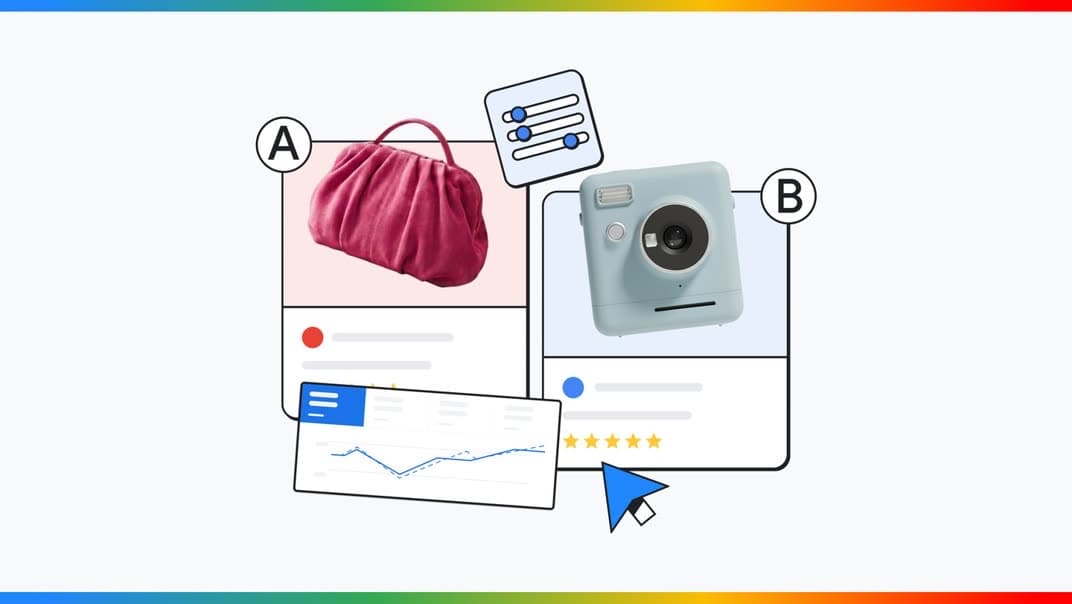
Google is adding new testing and planning tools to AI Max for Search. From September, marketers should be able to test budgets and ROI targets across several Search campaigns in a single A/B test. There is also a Performance Planner for scenarios covering budget, bid and target values.
This matters more than the usual “more AI in Ads” announcement. It turns AI Max from pure automation into a space for experiments that you can control. At the same time, the platform remains both referee and player. That is why the tests should be tied to margin and the quality of new customers, not just to Google conversions.
What does this mean for you?
Before every AI Max test, define a business metric outside Google Ads, for example contribution margin per order, share of first-time buyers or return risk. Otherwise you will optimise faster, but not necessarily more profitably.
02 · Mistral
Mistral lets agents search, open and check sources.
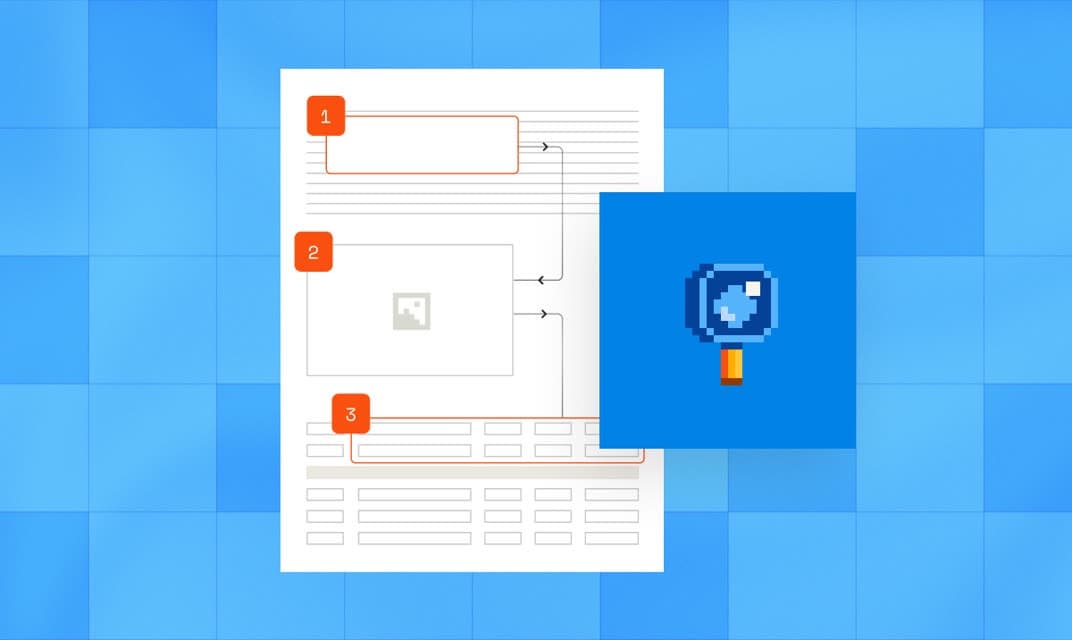
Mistral has introduced Agentic Search. Instead of only passing lists of hits to a model, the search can find information in several steps, open documents, check sources and back up the answer with evidence. Mistral reports better results on FinanceBench and OfficeQA Pro, along with fewer turns, fewer tokens and lower latency.
The eCommerce angle is not in the demo but in the internal data. Product data, supplier contracts, reasons for returns, support tickets and PIM exports are often scattered and contradictory. An agent only becomes useful when it can not just find the right source but also cross-check it.
What does this mean for you?
Start with a data set where wrong answers are expensive, such as return rules or product attributes.
03 · OpenAI
ChatGPT can read and draft Apple Messages on the Mac.
According to 9to5Mac, OpenAI is adding an Apple Messages plugin to the ChatGPT desktop app. It allows ChatGPT to read and search local chats on the Mac and to draft or send messages. By default, sending is still supposed to require the user’s approval.
This is not a classic eCommerce feature, but it is a foretaste of agents inside the flow of communication. As soon as assistants are allowed to read emails, chats and tickets, permissions become more important than prompting. Permanent approvals and tasks that bypass confirmation steps are particularly delicate.
What does this mean for you?
Set up an approval matrix for support and sales agents. Reading, drafting and sending are three different rights and should not end up in one big “AI may do everything” switch.
Source: 9to5Mac: ChatGPT adds Apple Messages integration, 20.08.2026
04 · Google Antigravity
Google brings coding agents to Enterprise subscriptions and IDEs.
Google is including Antigravity in eligible Gemini Enterprise Standard and Plus licences and is releasing extensions for common code editors. According to Google, AirAsia teams already generate more than 50 per cent of their production QA code with Antigravity.
The interesting part is less the IDE logos than the administration features: sandbox rules, browser and MCP permissions, budget limits, shared quotas, audit logs and the commitment that code is not used to train foundation models. This turns agents from a tinkering tool into a working tool managed by IT.
What does this mean for you?
If developers in your company use AI, do not judge it by speed alone. Check whether logs, budget limits, secrets, local repos and browser access are controlled centrally.
Source: Google Antigravity Blog: Bringing Antigravity to Gemini Enterprise, 2026
05 · Google Flow
Google shows how AI produces small campaigns faster.
Google gave three creatives unlimited access to Google Flow and had them build local campaigns. The examples are deliberately small: no global brand campaign, but studio quality for local businesses and specific briefs.
This is marketing, but it is useful all the same. The real shift is not that AI renders a nice video. The shift is that variants, formats and tests become cheaper. The bottleneck moves from producing to deciding: which message fits the margin, the stock and the target group?
What does this mean for you?
For creatives, build a clean briefing system first. Target group, offer, objection, margin, stock and no-gos must be clear before AI generates variants.
Source: Google Ads Blog: What 3 creatives built with Google Flow, 19.08.2026
To close.The key point of the week.
The key takeaway: AI becomes interesting where it is allowed near real data, permissions and decisions. For brands, the advantage lies less in the next model name and more in setting up data, approvals and workflows so that agents are actually allowed to work.