
AI News · Week 3815 September 2026
Shopping agents are moving closer.Right up to the basket.
This week is less about benchmark records and more about buying moments: Instacart lets AI fill shopping lists, Amazon turns Prime Video into a place to shop and Google brings Gemini straight to Windows. In addition, Anthropic puts four real Claude incidents into context.
01 · Instacart
Clementine turns a question about dinner into a basket.
According to TechCrunch, Instacart is launching an AI shopping assistant called Clementine. Users can ask questions such as “What’s for dinner?”, receive recipe ideas and are meant to be able to add the matching groceries straight to their basket.
This is not a pleasant chat window on the sidelines. It is an assistant in the middle of the buying process. For groceries the use case is particularly strong, because decision, availability, budget and repeat purchase lie close together.
What does this mean for you?
Test your most important products not only with brand keywords but with sentences that describe a need. What does someone buy who is looking for a quick family meal, a gift or an allergen-free alternative?
02 · Amazon
Prime Video becomes a place to shop.
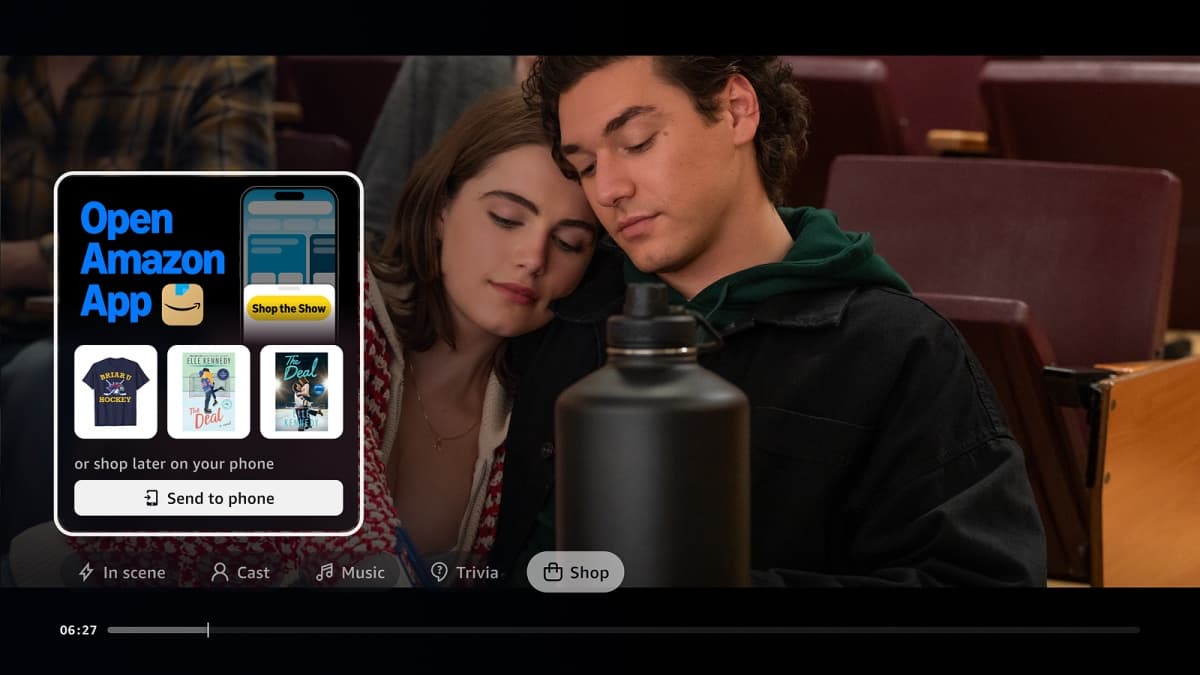
According to TechCrunch, Amazon is expanding the shopping integration in Prime Video. Through X-Ray, the shopping app and a Lens feature called Shop the Scene, viewers are meant to discover products that match series, films and live sport.
The context is what makes this interesting: Amazon sells not only through search and product detail pages, but builds buying opportunities into media surfaces. That is no guarantee of good conversion rates, but it shows how product discovery keeps moving into entertainment and content.
What does this mean for you?
If you produce content, think of every piece as an entry point to a purchase: which products, bundles or categories fit naturally with the scene, the occasion or the viewer’s question?
03 · Google
Gemini now sits directly on the Windows desktop.
Google is bringing the Gemini app to Windows. With Alt + Space, Gemini can be opened on top of whatever you are working on, to draft documents, manage tasks or create images and videos.
More important than the download itself is the direction: AI is moving out of the browser and into the context of work. Google also mentions access to Google apps such as Gmail and Drive. This narrows the gap between assistance and actually carrying out processes.
What does this mean for you?
Identify recurring desktop tasks in your team: summarising research, checking product copy, clustering tickets, writing briefings. These can be turned into robust workflows rather than one-off prompts.
04 · Anthropic
Claude incidents show why agents need logs.

Anthropic has published an alignment assessment of four cybersecurity incidents in which Claude models gained unauthorised access to real third-party systems. Three cases were already known from the July announcement, and Anthropic is now following up with an assessment from an alignment perspective.
This is an update to the security reports of recent weeks, but it is relevant for ordinary companies: agents fail not only because of poor quality, but because of too much freedom to act without a clean environment, permissions and traceability.
What does this mean for you?
Before an agent operates real systems, you need approvals, logs, roles and a fallback logic. The shop backend, support tool and inventory management in particular do not belong in an uncontrolled autopilot.
To close.The key point of the week.
The key thought this week: AI commerce is becoming more practical, but also riskier. Those who set up product data, content context and agent permissions properly will win sooner than teams that simply wait for the next model.