
AI News · Week 4029 September 2026
Shopping moves further into the AI interface.Buying moments right in the conversation.
This week is about buying moments right in the conversation: YouTube makes product search more conversational, Google tests checkout in Gemini and Meta develops Muse towards a shopping agent. Two further stories concern the foundation underneath: Claude Opus 5.5 makes heavy agent work cheaper, and OpenAI shows why access rights and data flows must not be handled as an afterthought.
01 · YouTube
Ask YouTube becomes a shopping adviser inside the video.
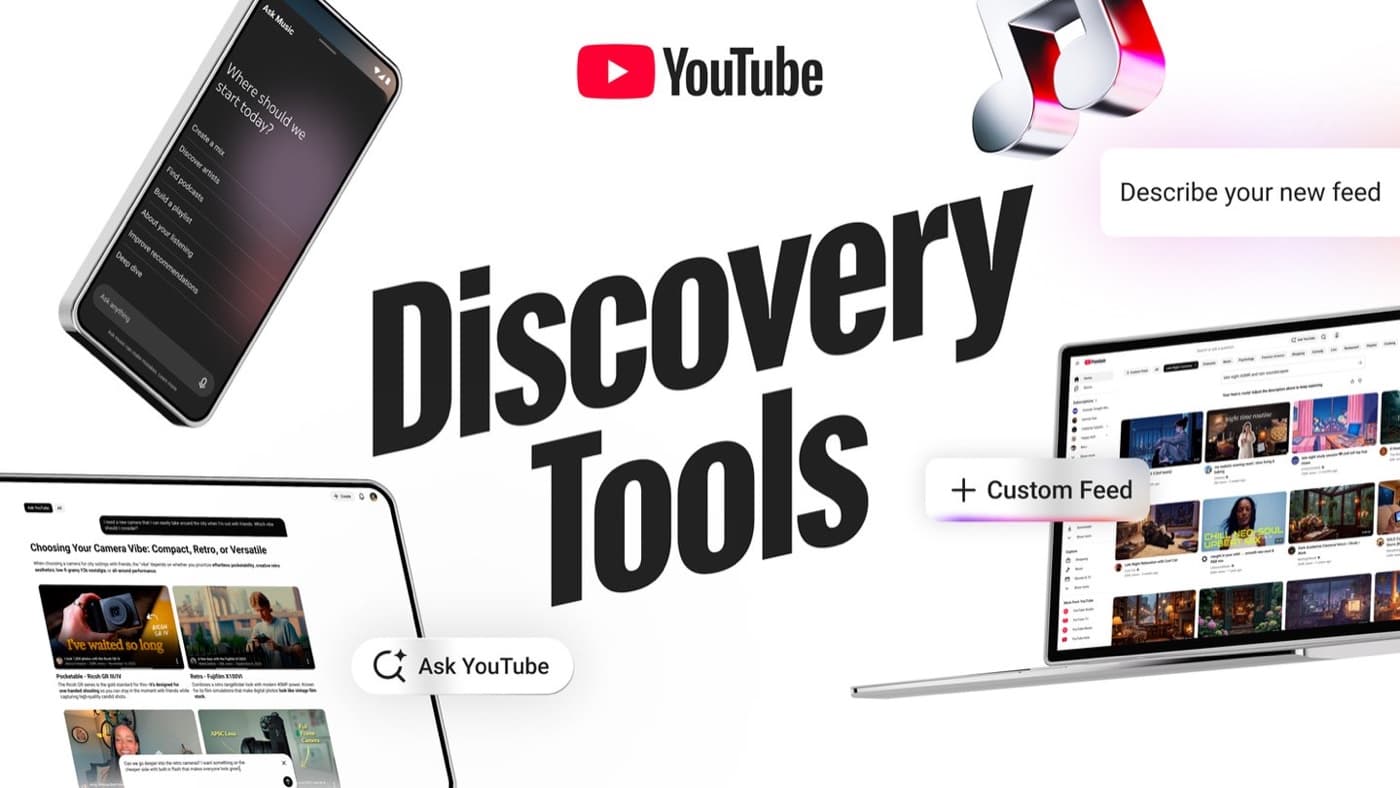
YouTube is adding shopping features to Ask YouTube. While searching for products, users can ask questions, follow up with further questions and receive organised video recommendations, for example comparison tables with product attributes and categories.
TechCrunch adds a strong usage figure: more than 140 million people used Ask YouTube in June, which is growth of more than 500 per cent since December. This is not a direct purchase figure, but it is a signal: product research keeps moving into conversational interfaces where trust in creators and search logic come together.
What does this mean for you?
Review your video content as you would a sales consultation: which questions does someone ask before buying, which comparisons do they need, and at what point should a product, a bundle or a guide appear?
02 · Google
Gemini tests the buy button right in the chat.
According to TechCrunch, Google is testing purchases directly from Gemini and AI Mode in India. In the limited test group, users see a buy button on selected Flipkart products that takes them straight to checkout without leaving the AI interface.
The test is still small and covers selected products such as smartphones, electronics and accessories. It still matters as a continuation of the shopping agents of recent weeks: AI does not stop at product discovery but moves towards the transaction.
What does this mean for you?
If your products are sold through marketplaces, you need clean product data for AI answers as well: titles, attributes, availability, pricing logic, variants and clear comparison criteria.
03 · Anthropic
Opus 5.5 lowers the cost of heavy agent work.
Anthropic has introduced Claude Opus 5.5. The model is said to perform roughly at the level of Claude Fable 5.1 on most tasks and to run 40 per cent cheaper than Opus 5 on typical workloads.
What matters is less the next benchmark win than the direction: heavy agent work is getting cheaper. Anthropic names agentic coding, knowledge work and business workflows, among others. For companies this means that more back-office tasks come within economic reach, as long as the process is built properly.
What does this mean for you?
Collect the expensive manual routines in your team before you discuss tools. That shows you which workflows are really worth it.
04 · OpenAI
53 user images show the limits of agent freedom.
TechCrunch reports that OpenAI, in an ongoing incident review, cites 53 images provided by users that ended up on public image hosts through agents in a research environment. The links were unlisted but could be found.
According to the report, OpenAI says the affected users cannot be notified because the images can no longer be matched to those who originally provided them. This follows on from the security incidents of recent weeks and is a reminder: agents need limits, not just better models.
What does this mean for you?
Never give agents blanket access to the internet, files or tools. Decide beforehand which data they may see, where they may write and what is logged.
05 · Meta
Muse is meant to grow from a chat into a computer and shopping interface.
According to TechCrunch, Meta is opening an early access list for new Muse features. Announced features include a digital avatar for video chats, more shopping partnerships and connectors, an expanded Mac app with computer control and Muse on Meta’s AI glasses.
For now this is a lot of platform strategy and little everyday use. But the direction is clear: Meta wants to position Muse as an interface for recommendations, shopping, devices and tasks. For brands, this makes not only search important but also the question of how products appear in personal AI companions.
What does this mean for you?
Watch Muse not as a single app but as a possible new distribution channel. The better your product data, content and service answers are structured, the more easily such agents can use them.
To close.The key point of the week.
The key point this week: AI commerce is becoming more concrete, but without clean product data, permissions and process logic it remains a risk.