
AI News · Week 4717 November 2026
ChatGPT can now pay.Will the agent get through your checkout?
OpenAI now lets ChatGPT agents pay for themselves and tells shops very specifically what they should prepare for it. In addition, Google Search gets its biggest model upgrade, Shopify shows new customers matching products in the customer account, and n8n launches a personal agent for routine jobs.

01 · OpenAI
ChatGPT Wallet: the agent goes shopping, and your shop has to let it in.
On 13 November OpenAI introduced the ChatGPT Wallet. It allows a ChatGPT agent to pay on behalf of its user without seeing the real card details. Beforehand, the customer checks the items, the total and the card, and confirms every purchase via Face ID or fingerprint. Payment is made with a token from Visa, Mastercard or American Express that runs through your perfectly normal checkout. Order, prices, returns and customer service stay with you.
The start is small: initially for ChatGPT Pro in the US. More interesting for you is the Commerce Partner Playbook that OpenAI supplies alongside it. It sets out what shops should do now: claim your business in ChatGPT and upload a product feed with current prices and availability, configure your firewall or CDN so that signed ChatGPT agents (Web Bot Auth) are not blocked, and clarify with your payment and fraud provider that genuine agent purchases are not declined. For this, OpenAI is working with Stripe, Adyen, Forter and Riskified, among others.
What does this mean for you?
No German customer is buying from you via ChatGPT Wallet yet. But the homework is the same as with Amazon Shop Direct: anyone who blocks agents or has a patchy feed drops out. Clarify two questions with your service providers this week: does your bot protection block AI agents across the board? And would your fraud tool cancel a purchase that shows no normal click behaviour?
02 · Google
Gemini 4 Hydrogen in Google Search: more sub-questions, more links, more comparison tables.
On 12 November Google switched Search over to Gemini 4 Hydrogen. According to Google, this is the biggest model upgrade to Search so far, worldwide and for all users. Search now understands long questions with several parts and typing errors better.
Using what is known as query fan-out, it runs many partial searches at the same time in the background and, according to Google, links to more different pages than before, including ones that users would otherwise not have found. The answers are also becoming more visual: more images, comparison tables and small, purpose-built tools.
What does this mean for you?
Customers no longer just type “men’s running shoes”, they ask “which running shoe for wide feet, under 150 euros, for tarmac”. It is exactly these sub-questions that Search now breaks down one by one. Take your five most important products and write down the questions customers ask about them in support. Answer them on the product page: material, fit, who it suits and who it does not. The more clearly that is stated there, the better your chances of being linked for these sub-questions.
Source: Google: Google Search gets a major upgrade with Gemini 4 Hydrogen, 12.11.2026
03 · Shopify
Shopify shows new customers matching products in the customer account.
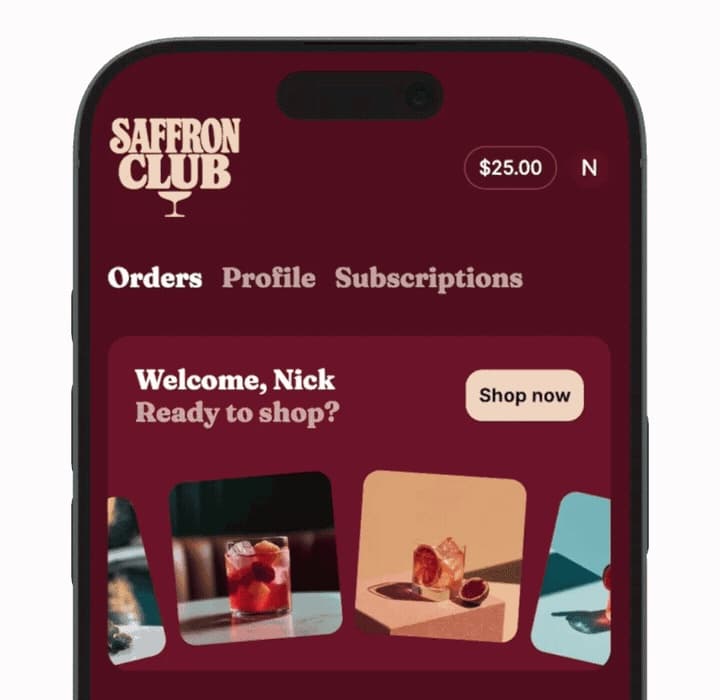
Since 12 November Shopify has been showing personalised product recommendations from your catalogue in the new customer account when a logged-in customer has not yet ordered anything from you. Shopify calculates the order from what it knows about this buyer’s preferences. In addition, a customer’s store credit now appears at the top of every page in the customer account. Both are only available in the new version of customer accounts.
What does this mean for you?
Customers with an account but no order have so far mostly seen an empty account. Now they automatically receive suggestions without you having to build anything. Check in the admin whether you are still using the old customer accounts. If so, Shopify itself recommends letting Sidekick help you with the switch. And if you use store credit for returns or loyalty campaigns: customers now see their credit everywhere. A good moment to raise this actively before Black Friday.
04 · n8n
Nod: a personal AI agent for your tedious routine jobs.
On 10 November n8n Labs released Nod as a research preview. It is a standalone app for Mac and Windows, separate from n8n, open source and free of charge. Nod has its own browser in a local sandbox and works in your apps such as Gmail, Calendar, Drive and Slack, but also on websites without an interface.
Before Nod sends, pays for or deletes anything you did not ask for, it checks with you. You pay only your AI provider, via API key or ChatGPT subscription, and can set a monthly limit. Anyone who uses n8n can connect their instance.
What does this mean for you?
Two examples from the n8n post apply one to one to e-commerce: pulling invoices from supplier portals every month and filing them for accounting, and transferring figures from a dashboard without an export function into your weekly report. Test Nod with exactly one such job. It is a research preview, so for now nothing that real payments or customer data depend on.
Source: n8n Blog: Meet Nod, 10.11.2026
To close.The key point of the week.
AI agents are becoming real customers right now. They search via Google, buy via ChatGPT and handle routine jobs for you. Whether they get through in your shop depends on firewall, feed and product pages. Pick one point and get it done by Friday.